

Dr. John j. Greer
London, Ontario – September 20, 2010 – The Ontario Rett Syndrome Association Board of Directors has unanimously approved the funding of a $35,000 Research Grant to Dr. John J. Greer, PhD, AHFMR Scientist and Professor, Department of Physiology at the University of Alberta.
Dr. Greer’s research grant proposal submission, entitled Investigation of Respiratory Dysfunction in a Mouse, was evaluated by ORSA’s Research Advisory Committee. This committee is comprised of prominent neurologists, geneticists and scientists from across Canada assisted by members of ORSA’s Board of Directors. Dr. Greer’s project collaborators include Jun Ren, Postdoctoral Fellow and Wei Zhang, Research Associate.
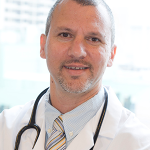
Dr. Yaron Finkelstein
London, Ontario – July 25, 2011 – The Ontario Rett Syndrome Association Board of Directors has unanimously approved the funding of a $25,000 Research Grant to Dr. Yaron Finkelstein, Associate Professor of Pediatrics, Pharmacology and Toxicology at the University of Toronto and staff physician at The Hospital for Sick Children, Toronto.
Dr. Finkelstein’s research grant proposal submission, entitled Dose-Response Efficacy and Safety Analysis of Recombinant Human IGF-1 in Girls with Rett Syndrome, was evaluated by ORSA’s Research Advisory Committee. This committee is comprised of prominent neurologists, geneticists and scientists from across Canada assisted by members of ORSA’s Board of Directors. Dr. Finkelstein’s project is a collaborative venture with Boston Children’s Hospital. Additional investigators involved include Matt Gregas, PhD, Ingrid Holm, MD, MPH, Omar Khwaja, MD, PhD, Leonard Rappaport, MD and Mriganka Sur, PhD.
2012
The board of ORSA unanimously approved the funding of up to $25,000.00 to sponsor the second Canadian Rett Syndrome Research Scientific meeting held on Thursday, April 26th, 2012. Over twenty-five researchers from across Canada came together at the Delta Meadowvale Hotel to meet each other, to share their RTT research project and to generate future research collaborations. In 2006 the first Canadian Rett Syndrome Research meeting was held in Vancouver, BC. ORSA provided funds towards the 2006 meeting. As expected the 2012 scientific meeting was a huge success. The difference from the 2006 meeting is there are over double the amount of researchers attending. Rett syndrome research in Canada is expanding rapidly. Findings from Canadian research projects are providing vital information to the world wide research community. ORSA is proud to fund and host this event and to support Canadian Rett syndrome research.

Dr. Galen Wright, PhD
Electrophysiological non-invasive biomarkers in Rett Syndrome evaluation
LAY SUMMARY
This prospective single-center study, conducted at the CHU de Sainte Justine (Montreal, Quebec), aims to develop new non-invasive biomarkers of Rett syndrome progression in a pediatric cohort. Version date 11/22/2021 These biomarkers are based on functional and spectral connectivity including measurements of coherence and cortical integration in electroencephalogram, and mismatch negativity by auditory evoked potentials. Prospective data with repeated measurements one year apart will be collected in patients and age-matched controls, and disease evolution and level of severity (standardized scales as RSBQ and CGI) will be compared between both time points. These values will serve as a baseline for comparison in future therapeutic trials. Indeed, the first gene therapy in Rett Syndrome (REVEAL study, Taysha) is being launched at Ste-Justine, initially in adults, with a subsequent pediatric phase considered if the therapy is well tolerated in adults. Similar electrophysiological measurements will be conducted in the adult patients but an understanding of the evolution of such neural signatures in pediatric age groups is lacking. We thus propose to assemble a first large pediatric Rett syndrome cohort to document the natural evolution of these electrophysiological signatures over time, and to address how these biomarkers evolve with disease progression and therapies.

Dr. Rossignol
Dr. Elsa Rossignol is a pediatric neurologist at the CHU Sainte-Justine and an associate professor of clinics in the departments of Neurosciences and Pediatrics at the Université de Montréal. She is the recipient of the Canada Research Chair on the Neurobiology of epilepsy. Her research aims to clarify the molecular and cellular basis of pediatric epilepsies. Using Next Generation Sequencing in large cohorts of patients, her lab contributed to the identification of dozens of novel epilepsy genes. Furthermore, her lab uses multimodal approaches to study the network mechanisms by which mutations in these genes result in epilepsy and cognitive deficits, with a focus on their impact on network inhibition. Her recent work revealed the key role of cortical disinhibition in genetic generalized epilepsies with cognitive deficits, and the therapeutic benefits of re-establishing network inhibition on seizures, attention and cognitive flexibility. In addition, Dr. Rossignol is the Director of the Integrated Rett Syndrome Clinic at the CHU Sainte-Justine. Her clinical research on Rett syndrome aims to identify better biomarkers of disease progression, to optimize clinical scales to track disease state and to explore novel therapeutic options, including gene therapy. In particular, she is the lead PI for the REVEAL gene therapy trial for Rett syndrome (Taysha, NCT05606614). Altogether, as a clinician-scientist working in the field of rare diseases, Dr. Rossignol aims to advance care for children with genetic neurodevelopmental disorders including Rett syndrome.

Dr. LeRoux
Dr. Marie Le Roux is a pediatric epileptology fellow at the CHU Sainte-Justine. She achieved her pediatric neurology residency in France, and a Master’s Degree in Neuroscience at Paris-Sorbonne University, France. She has particular interest in electrophysiology. She recently worked on high resolution EEG and source localisation in focal refractory epilepsies. Her main interest concerns electrophysiology in neurogenetic patients. She recently integrated the Rett Syndrome Clinic at the CHU Sainte-Justine. Her clinical research on Rett syndrome aims to identify non invasive biomarkers of disease progression through electrophysiology in order to help generate normative data in this population, which will serve as a baseline to compare post-therapy data in the context of future therapeutic interventions, including gene therapy.
Dr. Rossignol and Dr. LeRoux
Continue supporting their research funded by the Hope Fund in 2023 titled: Electrophysiological non-invasive biomarkers in Rett Syndrome evaluation.
2024
The board of ORSA unanimously approved the funding of up to $50,000.00 to sponsor the World Congress Research/Scientific meeting held Oct 11-14, 2028.
2025
The ORSA Board will hold research grant funding this cycle to give the Hope Fund the opportunity to grow and support larger impact in the future.

