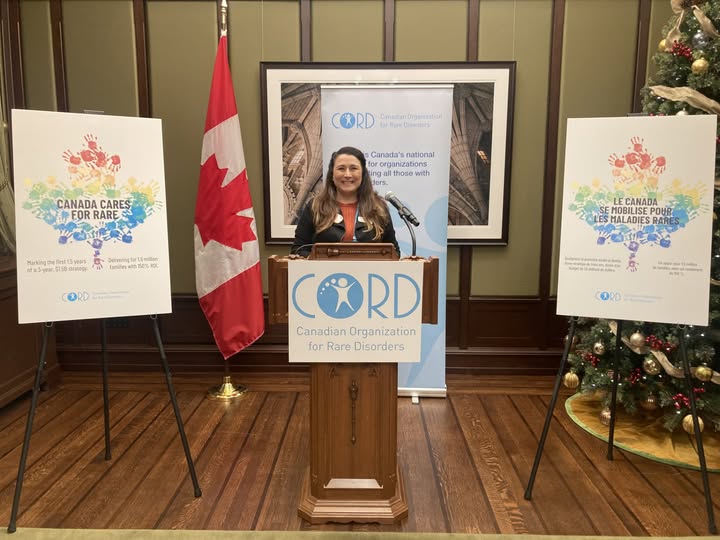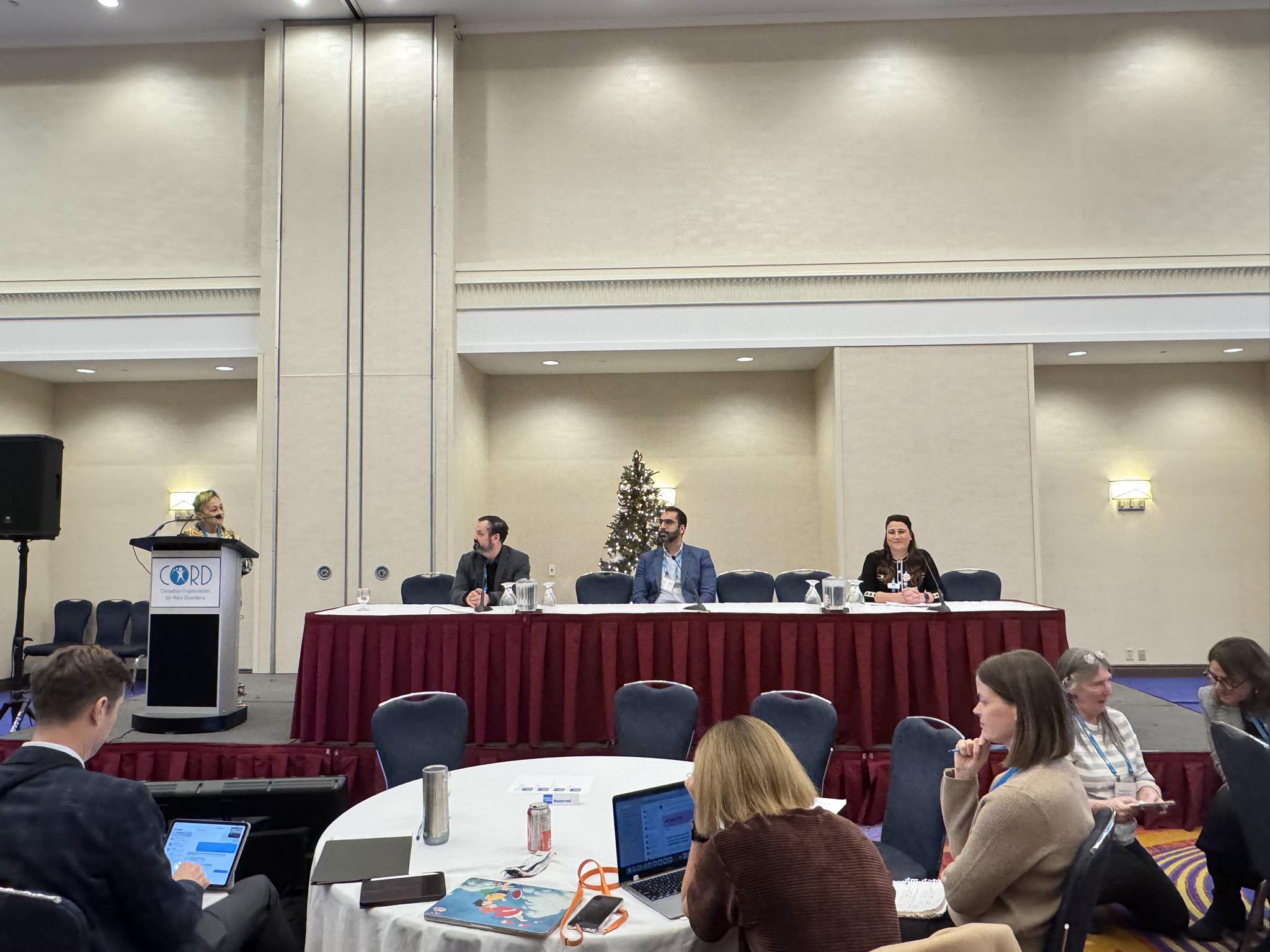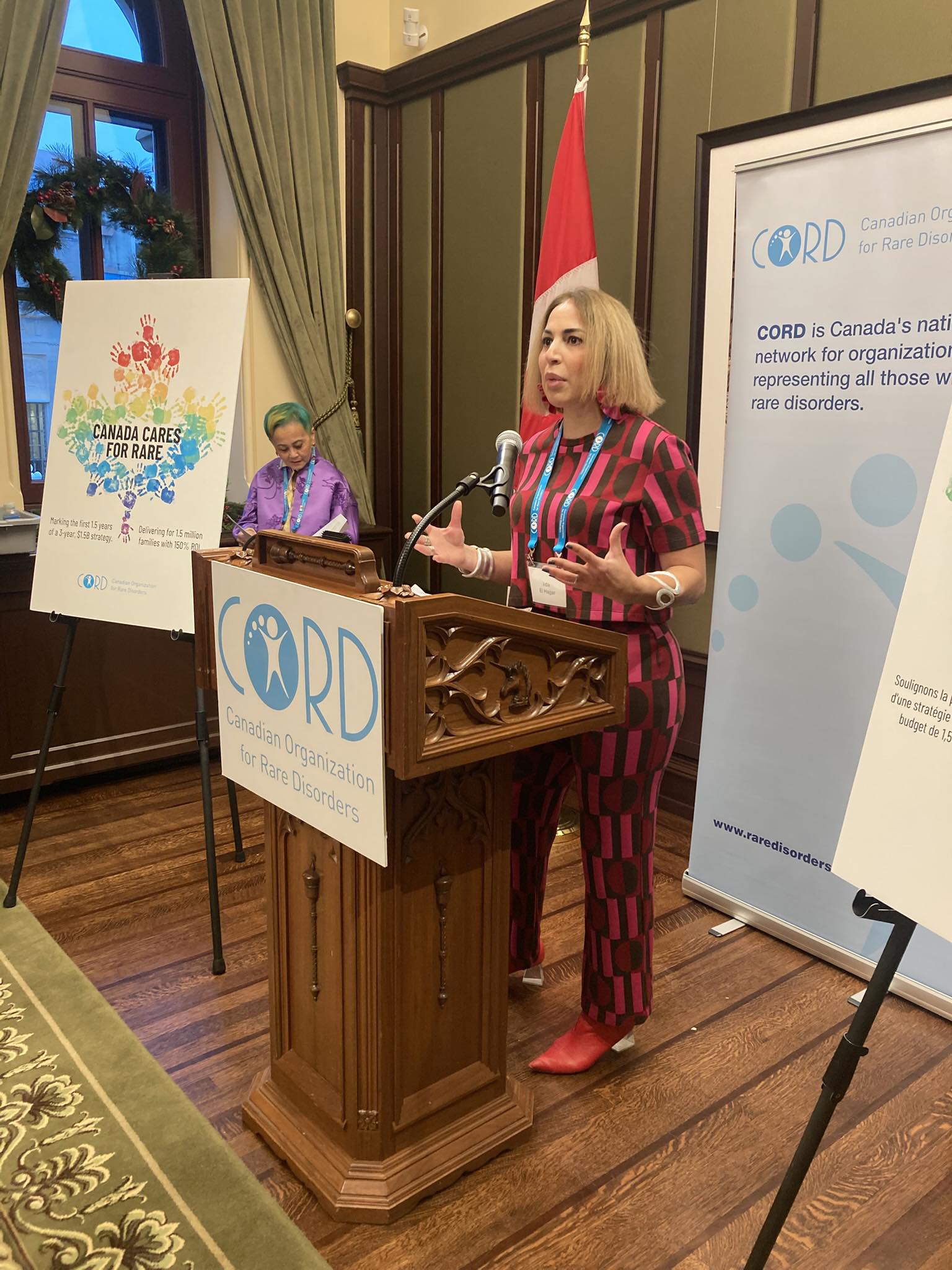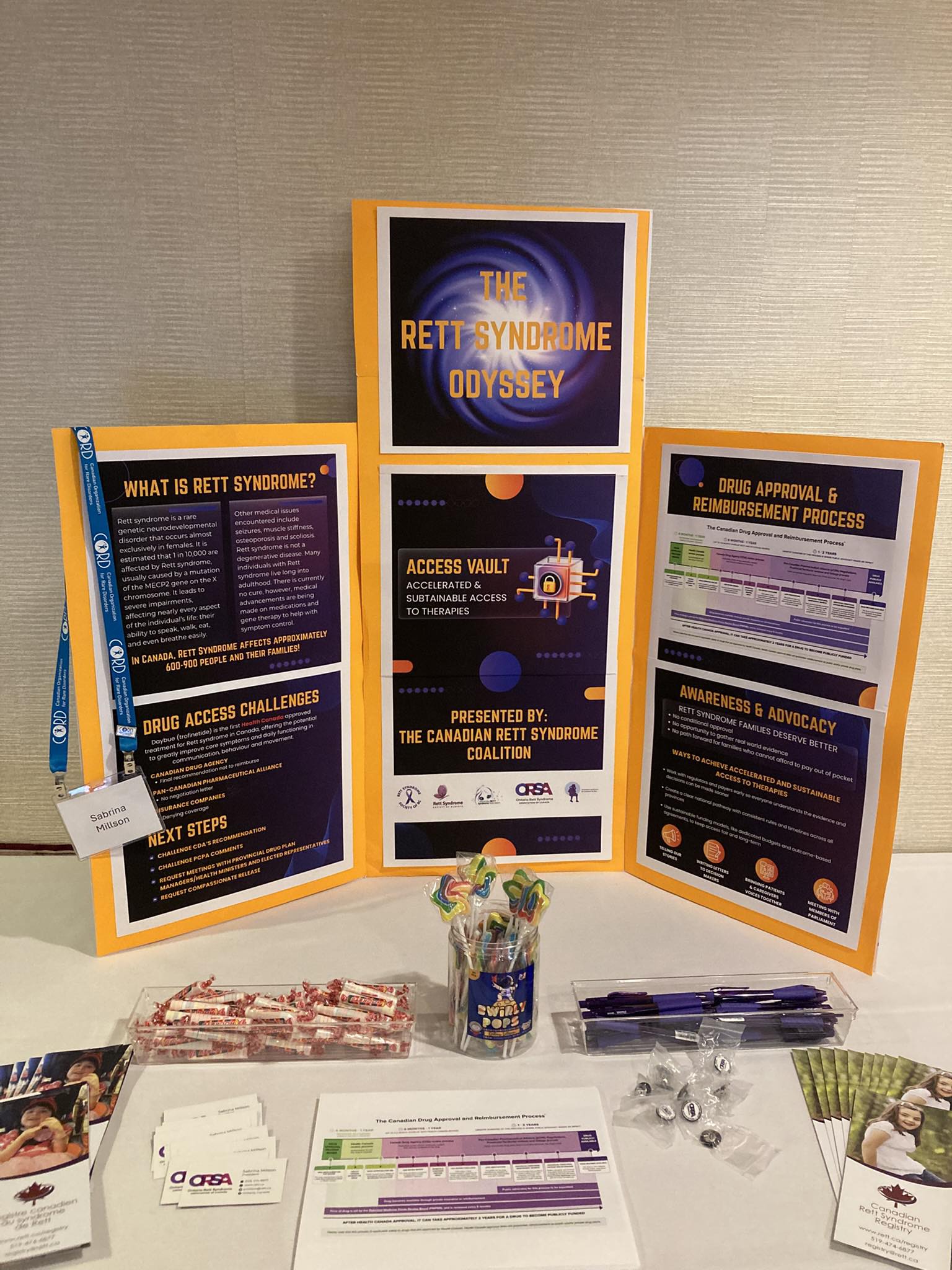
CORD 2025 fall conference
We are grateful to the Canadian Organization for Rare Disorders for inviting ORSA Canada to speak at Parliament Hill on behalf of our community and advocate for fair drug access for Canadians living with Rett syndrome.
****
Dear members of Parliament, CORD attendees, Industry, Health officials, Advocates, Families and Patients of Rare,
Imagine living every day with the challenges of Parkinson’s, cerebral palsy, epilepsy, anxiety, and autism all at once. That is life, for someone with Rett syndrome. They require 24 hour 7 days a week 1:1 care until they draw their last breath. This rare genetic neurodevelopmental disorder affects my daughter Ella, and many more like her.
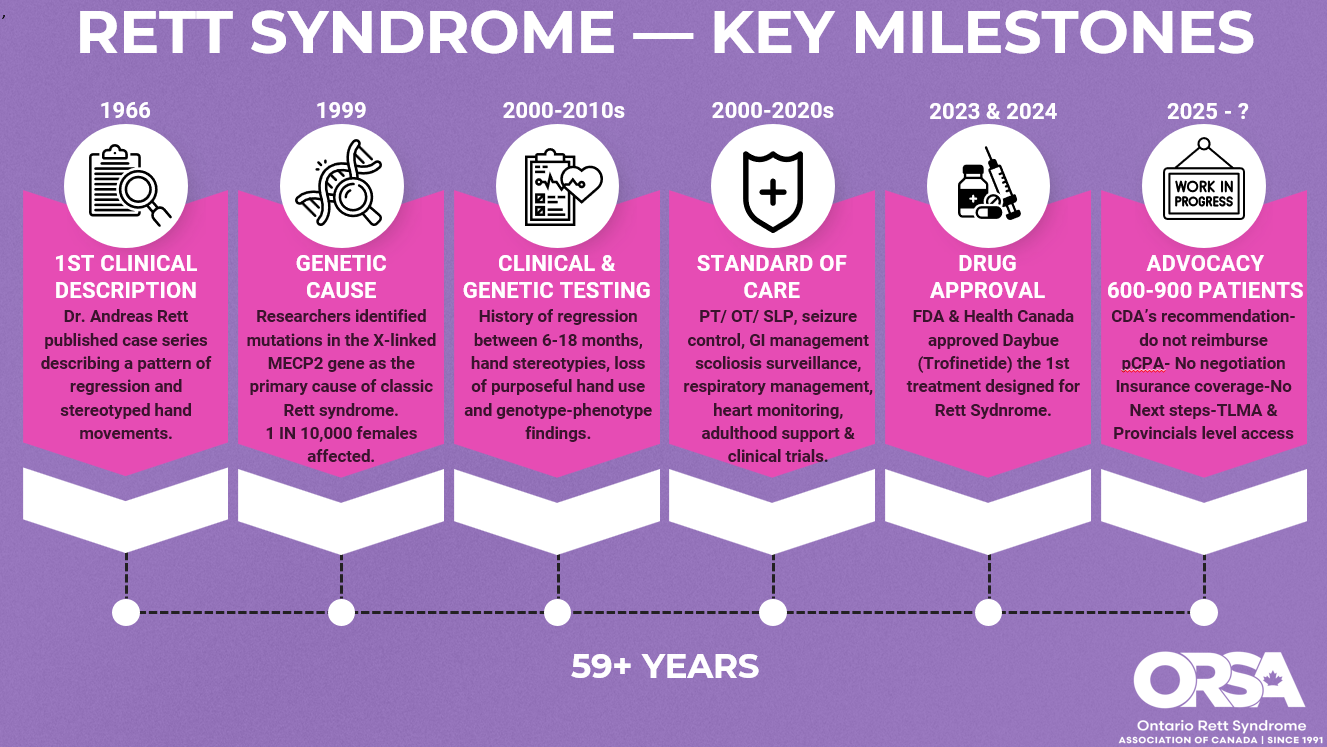
Here in Canada, approximately 600- 900 individuals are living with this devastating disorder. Families wake up every day facing breathing difficulties, uncontrolled movements, feeding challenges, sleep disruptions, and the heartbreaking reality that their loved ones cannot communicate their basic needs.
BUT THERE IS HOPE!
For the first time, there is a Health Canada approved treatment that can help brain cells make better connections, supporting improvements in communication, behaviour, and movement.
This is the hope the Rett syndrome community has been waiting for. The hope that could finally offer a better quality of life.
BUT THERE IS A CATCH.
The only Health Canada approved treatment for Rett syndrome was denied reimbursed by the Canadian Drug Agency.
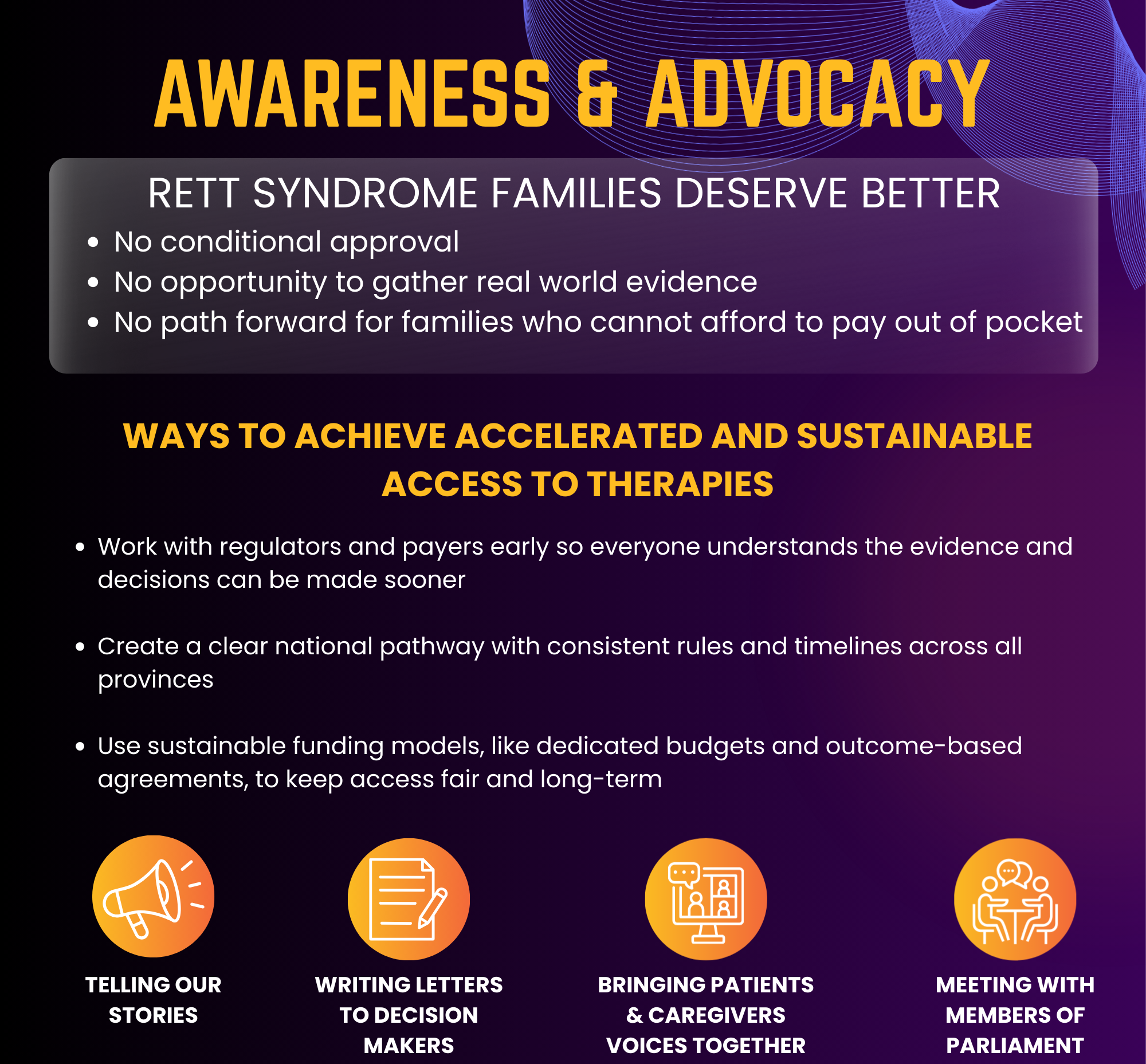
• No conditional approval.
• No opportunity to gather real world data.
• No path forward for families who cannot afford to pay out of pocket.
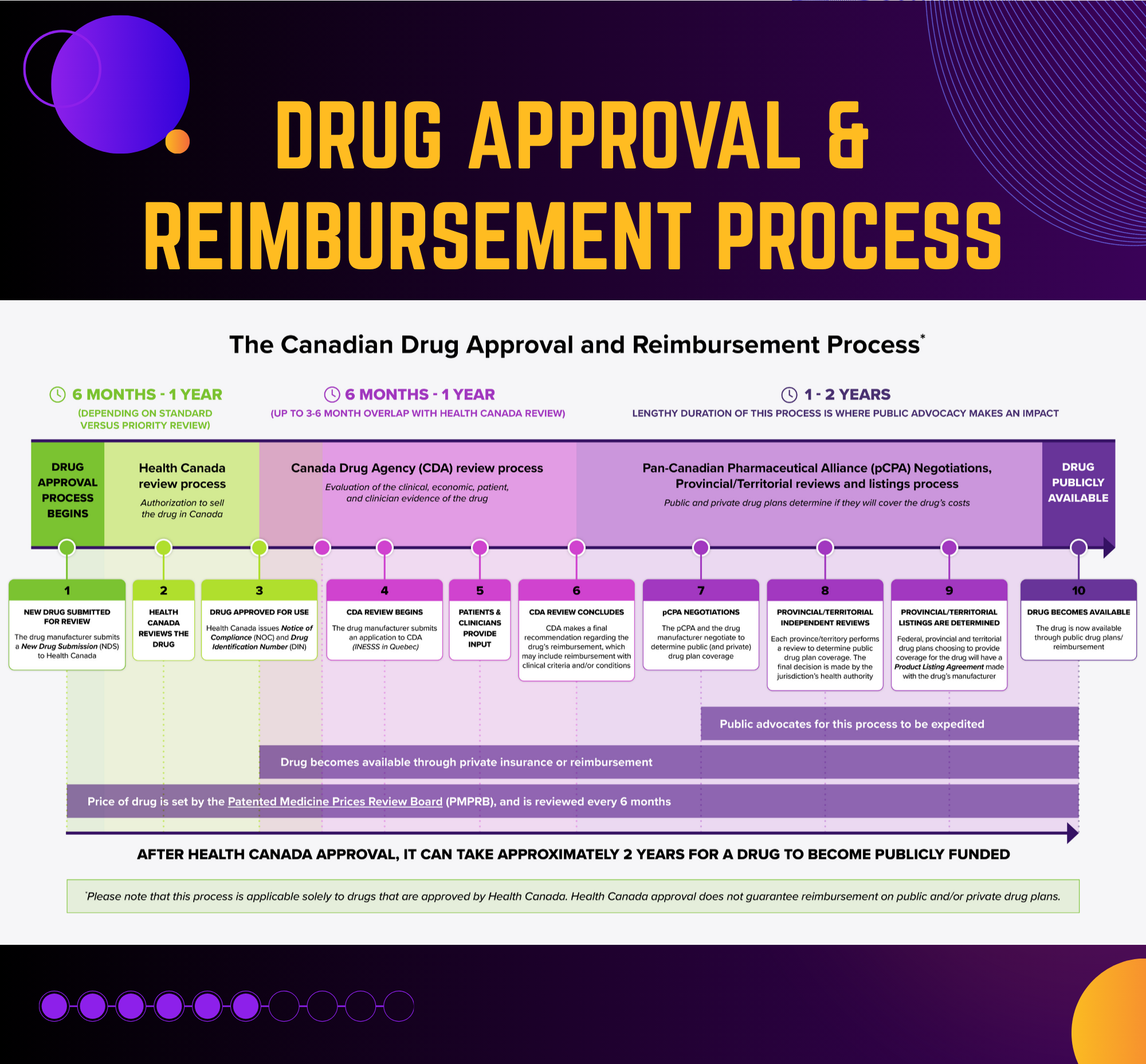
The impact of this negative decision can not be understated. The pan Canadian Pharmaceutical Alliance is declining all negotiations, while private insurers are also refusing coverage.
So, unless you win the lottery or have access to significant wealth, this treatment will remain out of reach for most.
RETT SYNDROME FAMILIES DESERVE BETTER!
Despite decades of waiting, despite the strong scientific evidence, despite our neighbours to the south and families across Europe gaining access to this medication, and despite the fact some Canadian families uprooting their lives, leaving their homes, their jobs and support networks to seek this treatment elsewhere. The system continues to demonstrate its inability to keep up with modern scientific advances and the system demonstrates a lack of compassion for those affected with rare disorders.
SO, ask yourself,
What does this say about Canada’s commitment to rare diseases?
Why is it that only some rare diseases get access to approved therapies?
Is it the size of the community? Or is it simply that a condition like Rett syndrome is too rare and to affects too few to matter?
Today, we are not seeking special treatment. Only fair access to an existing medication, one that is already approved, and one that is giving hope to families around the world.
Canada must ensure that it’s rare disease strategy is not just words on paper, it must be a real commitment to fairness, to access, and to compassion for all those living with a rare disease.
Thank you,
Sabrina Millson, President
Ontario Rett Syndrome Association of Canada